


Quantitative features of memorial urbanonyms in the Kaliningrad region

https://doi.org/10.26907/2541-7738.2026.3.147-159
Abstract
Based on the analysis of semantic parameters that can be quantified, this article examines the system of memorial urbanonyms in the Kaliningrad region, which developed as a result of the large-scale renaming in the aftermath of World War II, and compares it with an average model of memorial urbanonymy in the Central Federal District of Russia, derived using the methods of linguistic statistics. The results indicate that the two naming systems are generally similar to each other. Particularly, they show comparable numbers of dedications to politicians, writers, and events from the country’s pre-Soviet history. In the Kaliningrad region, the street names honoring artists, especially composers, prevail, whereas the dedications to local residents are extremely rare.
About the Author
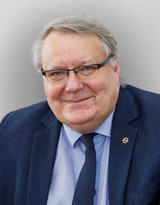
O. V. Peteshova
Immanuel Kant Baltic Federal University
Russian Federation
Russian Federation
Olga V. Peteshova, Cand. Sci. (Philology), Associate Professor, Higher School of Linguistics
Kaliningrad
References
1. Razumov R.V. The modern concept of urbanonym in Russia. Yaroslavl Pedagogical Bulletin, 2012, vol. 1, no. 2, pp. 166–170. (In Russian)
2. Kachalkova Yu.A. Urbanonymic space of contemporary Yekaterinburg (official names). Voprosy Onomastiki, 2013, no. 1 (14), pp. 88–104. (In Russian)
3. Golomidova M.V. Urbanonyms as a resource for managing the perception of urban space. Kommunikativnye Issledovaniya, 2019, vol. 6, no. 1, pp. 11–30. https://doi.org/10.25513/2413-6182.2019.6(1).11-30. (In Russian)
4. Кotel’nikova K.V. The influence of social factors on the evolution of toponyms in German. Vestnik Bashkirskogo Universiteta, 2014, vol. 19, no. 2, pp. 582–586. (In Russian)
5. Rusiya T.N. Personalist images in identity politics at the local level. South-Russian Journal of Social Sciences, 2022, vol. 23, no. 1, pp. 81–95. https://doi.org/10.31429/26190567-23-1-81-95. (In Russian)
6. Voroshilin S.I. Toponymic wars – renaming forced by wars and revolutions (part 2). Voprosy Vseobshchei Istorii, 2012, no. 14, pp. 145–164. (In Russian)
7. Ryzhkov A.B. The sacralization of memorial toponyms in social consciousness. Geography Issues, 2018, no. 146, pp. 200–208. (In Russian)
8. Ran A. Historical narratives and public memory in urban space: Street names and (re)naming practices of the Hankow Concession. Names, 2026, vol. 74, no. 1, pp. 44–60. https://doi.org/10.5195/names.2026.2763.
9. Crivellari F. Prekäre Erinnerungsorte: Straβen als Medien der Erinnerungskultur – mit einem Beispiel aus Konstanz. Schriften des Vereins für Geschichte des Bodensees und seiner Umgebung, 2013, Bd. 131, S. 243–266. (In German)
10. Popov S.A., Gerasimova K.M. Preserving the memory of the Great Patriotic War in the Russian onomastic space. Verhnevolzhskii Philological Bulletin, 2020, no. 4, pp. 89–98. https://doi.org/10.20323/2499-9679-2020-4-23-89-98. (In Russian)
11. Antonenko N.S. Personal memoratives in the system of Stalingrad’s hodonyms. Vestnik Nizhegorodskogo Universiteta imeni N.I. Lobachevskogo, 2023, no. 5, pp. 183–190. https://doi.org/10.52452/19931778_2023_5_183. (In Russian)
12. Pitina S.A., Taskaeva A.V. Socio-cultural trends and commemorative practices in the system of local hodonyms (a case study of street names in Chelybinsk). Bulletin of Chelyabinsk State University, 2025, no. 9, pp. 99–106. https://doi.org/10.47475/1994-2796-2025-503-9-99-106. (In Russian)
13. Efimova E.M. Probabilistic and statistical methods in the study of onomastics and its historical development (based on pleophonic and non-pleophonic names). Voprosy Onomastiki, 1983, no. 16, pp. 42–44. (In Russian)
14. Superanskaya A.V. Applying linguistic statistical methods to study the toponymic system of Moscow. In: Lingvisticheskaya terminologiya i prikladnaya toponomastika [Linguistic Terminology and Applied Toponymy]. Moscow, Nauka, 1964, pp. 119–121. (In Russian)
15. Klemensová T., Mistecký M. The workings behind the commemorative motive in Czech urban names. Names, 2025, vol. 73, no. 4, pp. 21–39. https://doi.org/10.5195/names.2025.2666.
16. Golovin B.N. Yazyk i statistika [Language and Statistics]. Moscow, Prosveshchenie, 1971. 190 p. (In Russian)
17. Kostyashov Yu.V. Povsednevnost’ poslevoennoi derevni: Iz istorii pereselencheskikh kolkhozov Kaliningradskoi oblasti 1946–1953 gg. [Everyday Life in the Post-War Rural Settlements: From the History of Resettles in Collective Farms of the Kaliningrad Region in 1946–1953]. Moscow, Polit. Entsikl., 2015. 263 p. (In Russian)
18. Gubin A.B. Toponymy of Kaliningrad. Kaliningradskie Arkhivy, 2003, no. 5, pp. 139–196. (In Russian)
19. Razumov R.V. Typology of urbanonymic system models in the Russian Federation. Vestnik of Kostroma State University, 2016, vol. 22, no. 4, pp. 121–125. (In Russian)
20. Kashcheeva A.V. Quantitative and qualitative methods of research in applied linguistics. Social- Economic Phenomena and Processes, 2013, no. 3, pp. 155–162. (In Russian)
Review
For citations:
Peteshova O.V. Quantitative features of memorial urbanonyms in the Kaliningrad region. Kazan Journal of Historical, Linguistic, and Legal Research. 2026;168(3):147-159. (In Russ.) https://doi.org/10.26907/2541-7738.2026.3.147-159
Views:
52
JATS XML



 Email this article